
Category: Transformation

  • Stories We Build Around Friendships

    Stories We Build Around Friendships

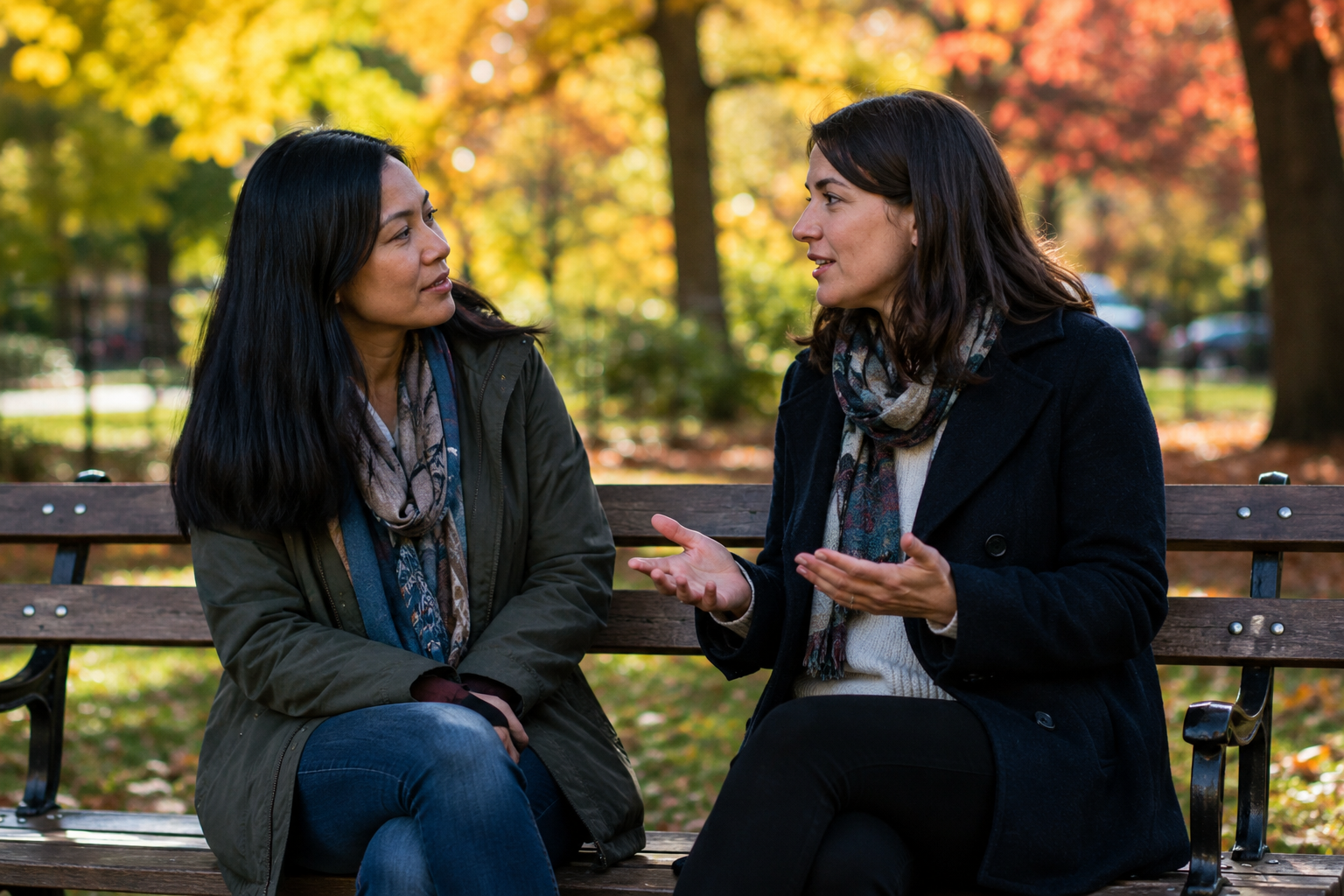
    Two people discussing their friendship on a bench

    When Friendships Change

    Recently, I found myself reflecting on a friendship that had existed for most of my adult life. It was the kind of friendship that becomes part of your personal history. When you know someone for decades, it is easy to assume that the relationship is a permanent fixture in your life. You begin to see it as part of who you are.

    As I thought about the possibility that this friendship might be coming to an end, I found myself asking a difficult question: What if the story I had been telling myself for years was no longer true?

    At first, that idea felt unsettling. I was not questioning whether the friendship had been real or meaningful. It was both of those things. What I began questioning was the narrative I had built around it.

    Many of us create stories that help us make sense of our lives. We tell ourselves things like, “This person will always be my friend,” or “We understand each other better than anyone else.” These stories are not necessarily wrong. In many cases, they are based on years of shared experiences and genuine connection.

    The problem is that people change.

    We change our interests, values, priorities, beliefs, and goals. Sometimes those changes happen gradually. They are so subtle that we do not notice them while they are occurring. Then one day we find ourselves looking across the table at someone we have known for years and realizing that both of us have become different people.

    The friendship may still exist, but the assumptions that once supported it no longer fit reality.

    What struck me most was the realization that I had expected the relationship to remain stable while both people within it continued to evolve. In hindsight, that expectation seems unrealistic. Change is one of the few guarantees in life. Yet many of us build our identities around the idea that certain relationships will remain largely unchanged.

    When reality moves in one direction and our personal narrative stays frozen in place, tension begins to develop.

    This is not limited to friendships. It can happen in marriages, family relationships, careers, and even our relationship with ourselves. We continue operating from an old story while life quietly writes a new one.

    The result is often confusion, disappointment, conflict, or grief.

    The more I reflected on this, the more I realized that suffering may not come solely from change itself. It may come from our resistance to updating the stories we tell about our lives. We cling to an outdated version of reality because it feels familiar and comfortable. Meanwhile, reality continues to move forward without asking for our permission.

    That does not mean relationships are not worth investing in. It does not mean every friendship is temporary or destined to fail. It simply means that relationships are living things. They require adaptation because the people within them are constantly evolving.

    Don’t Assume Friendships Last Forever

    Perhaps the healthiest approach is not to assume that a relationship will remain the same forever. Instead, we can recognize that change is inevitable and remain open to renegotiating what the relationship looks like over time.

    Some relationships will grow stronger through that process. Others may naturally come to an end. Neither outcome erases the value of what existed before.

    The lesson I am taking from this experience is not that relationships are fragile. It is that stories need revision.

    The narratives that help us make sense of one season of life may not be sufficient for the next. If we are unwilling to update them, we may find ourselves arguing with reality instead of learning from it.

    Growth requires more than changing our circumstances. It requires changing the stories we tell ourselves about who we are, who others are, and how we fit together.

    Sometimes the most difficult part of growth is not letting go of a person. Sometimes it is letting go of an old story.

    If you find yourself in a similar situation, check out my free eBook 4 Easy Steps to Transform Your Life Through Disruption.
  • Moving Beyond The Hero’s Journey

    Moving Beyond The Hero’s Journey

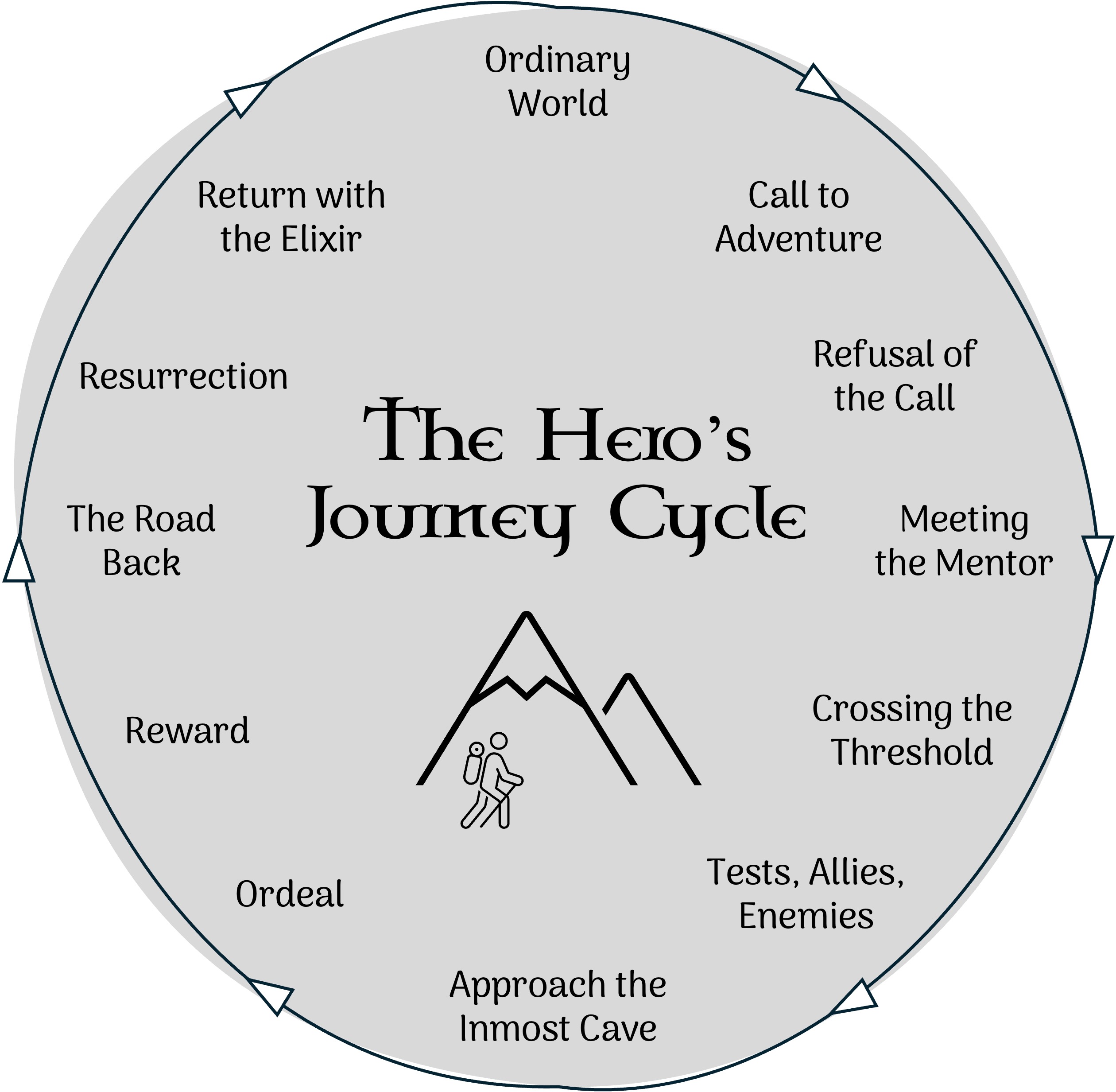
    The Hero's Journey cycle

    The Hero’s Journey: A Foundation for Personal Narrative Transformation

    The Hero’s Journey has become one of the most recognizable frameworks for understanding human transformation. From mythology and literature to film and popular culture, the structure appears everywhere. A person begins in an ordinary world, faces challenges and uncertainty, encounters obstacles, experiences transformation, and eventually returns changed in some meaningful way.

    For many people, this framework resonates deeply because it mirrors the emotional experience of struggle, growth, and self-discovery. It offers a way to make sense of pain, transition, and reinvention. It reminds us that difficult seasons are often part of a larger developmental process rather than evidence of personal failure.

    At its best, the Hero’s Journey helps people recognize that their lives contain movement, tension, meaning, and possibility. But there is also a limitation to viewing personal identity entirely through the lens of becoming a hero.

    Not everyone experiences life as a dramatic quest. Not every transformation arrives through triumph, certainty, or victory. Many people are simply trying to survive grief, rebuild identity after trauma, navigate transition, recover from rejection, or learn how to exist more authentically in a world that has often demanded performance over honesty.

    For some individuals, the pressure to become “the hero of your story” can actually feel exhausting.

    • What happens when someone does not feel heroic?
    • What happens when growth is slow, nonlinear, quiet, or invisible to others?
    • What happens when survival itself is the accomplishment?

    These questions invite us into a broader and more accessible understanding of personal narrative.

    Evolving Beyond the Foundation

    The stories we tell ourselves about who we are do not always unfold in clean narrative arcs. Real life is rarely structured like a movie script. Human identity is shaped through repetition, relationships, memory, emotion, culture, loss, adaptation, and meaning-making over time. We are constantly interpreting our experiences and organizing them into narratives that help explain ourselves to ourselves. Some of these narratives are empowering. Others become restrictive.

    A person who repeatedly experiences rejection may develop a story that says, “I do not belong.” Someone who grows up in highly critical environments may internalize the belief that they must constantly achieve in order to deserve worth or acceptance. A person navigating trauma may begin seeing themselves primarily through the lens of what happened to them rather than who they are becoming beyond it. Over time, these narratives shape identity in profound ways.

    This is why narrative exploration matters so deeply. The goal is not necessarily to turn ourselves into heroes. The goal is to become more aware of the stories operating underneath our choices, fears, relationships, and sense of self.

    Narrative awareness allows us to ask important questions:

    • Where did this story come from?
    • Who taught me to see myself this way?
    • What experiences reinforced this belief?
    • Does this narrative still serve me?
    • Is there another way to understand my life and identity?

    These questions create space for reflection rather than automatic self-judgment. They invite curiosity instead of shame.

    In many ways, identity is less about discovering one fixed “true self” and more about understanding the evolving stories we participate in throughout our lives. Human beings are constantly changing. We adapt to environments, relationships, opportunities, trauma, aging, success, loss, and transition. The narratives that once protected us may later begin limiting us.

    • A story that once said, “Stay quiet so you do not get hurt,” may eventually prevent someone from speaking authentically.
    • A story that says, “You must always be productive to have value,” may slowly disconnect a person from rest, joy, and emotional well-being.
    • A story that says, “You are too old to begin again,” may prevent someone from pursuing meaningful work, creativity, or connection later in life.

    The important thing is not whether these stories exist. Everyone has them. The important thing is whether we recognize them as narratives rather than unquestionable truth.

    This is where reflective writing and personal narrative work can become transformative. Writing slows down thought. It allows individuals to externalize internal dialogue and observe patterns that may otherwise remain invisible. Experiences that once felt chaotic or overwhelming can begin to take shape through language and reflection.

    Often, people discover that they are carrying identities they never consciously chose. They may realize they have spent years trying to be “the responsible one,” “the successful one,” “the invisible one,” “the caretaker,” “the disappointment,” or “the outsider.” These identities are rarely random. They are usually connected to adaptation, survival, belonging, or emotional protection.

    Recognizing these patterns is not about blaming ourselves or rewriting our lives into unrealistic positivity. It is about creating enough distance to ask whether old narratives still deserve authority over our present identity. Sometimes the most meaningful transformation is not becoming the hero. Sometimes it is becoming honest. Sometimes it is learning to see ourselves with greater compassion. Sometimes it is understanding that our worth was never dependent on perfection, productivity, achievement, or external validation in the first place.

    The Hero’s Journey remains valuable because it reminds us that transformation is possible. But perhaps the deeper invitation is not to become heroic. Perhaps it is to become more conscious of the stories shaping our lives and more intentional about the narratives we continue carrying forward.

    We may not always control what happened to us. We may not control every chapter of our lives. But we can begin examining the meaning we attach to those experiences and the identities we build around them. And sometimes, that process alone can change everything.

    Learn more about how you can transform your personal narrative and identity by checking out our services.

  • Narrative Reframing in 3 Simple Steps

    Narrative Reframing in 3 Simple Steps

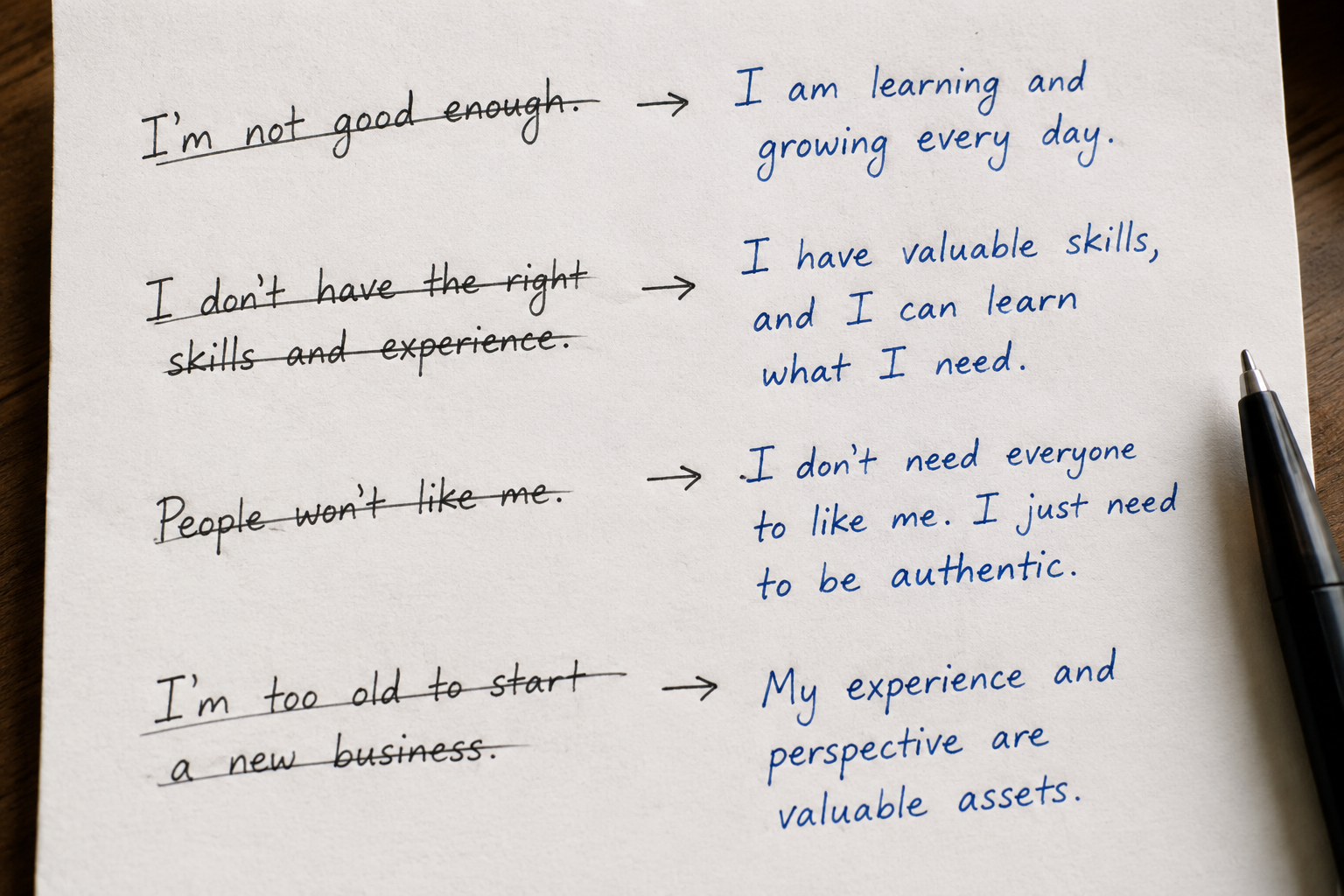
    Narrative reframing in 3 simple steps

    One of the most difficult parts of starting something new is not the logistics. It is not the website, the branding, the LLC paperwork, or the business plan. It is reframing the quiet narrative running underneath all of it.

    Narrative reframing begins with recognizing the internal stories we repeat to ourselves every day and understanding how those stories gradually shape identity, confidence, and behavior. When left unexamined, those narratives can quietly determine what we believe we are capable of pursuing, creating, or becoming.

    “I’m not good enough.”

    “I don’t have the right skills or experience.”

    “People won’t like me.”

    “I’m too old to be starting over.”

    These thoughts often appear so quickly and so automatically that we rarely stop to question them. Instead, we absorb them. We begin to treat them as truth. Over time, they stop sounding like thoughts and start sounding like identity.

    This process happens to all of us in different ways. We inherit stories from family systems, culture, institutions, relationships, trauma, rejection, and past experiences. Some stories were spoken directly to us. Others were implied through silence, exclusion, criticism, or comparison. Eventually, those narratives become internalized and begin shaping how we see ourselves and what we believe we are capable of becoming.

    One of the core ideas behind narrative reframing and exploration is this: we are not the stories we tell ourselves. That does not mean those stories are meaningless. It does not mean they came from nowhere. Many of them were developed as forms of protection. They helped us survive difficult environments, avoid rejection, minimize risk, or make sense of painful experiences. The problem begins when those narratives continue operating long after the original context has changed.

    A person who was constantly criticized may develop a narrative that says, “Nothing I do will ever be enough.” Someone who experienced exclusion may carry the belief that they are fundamentally unlikable. A person navigating transition or reinvention later in life may begin telling themselves they have “missed their chance.”

    These narratives often feel permanent because they have been rehearsed internally for years. They shape behavior in subtle ways. They influence confidence, relationships, creativity, vulnerability, and decision-making. They can stop someone from applying for a job, launching a business, writing a book, speaking up, setting boundaries, or pursuing a meaningful life transition. There is hope however – narrative reframing.

    Narrative Reframing in 3 Easy Steps

    The challenge is that most people do not recognize these narratives as stories. They experience them as facts. This is where the process of externalizing the narrative becomes important. Externalizing means separating yourself from the story rather than treating the story as your identity. Instead of saying, “I am a failure,” the narrative becomes, “I notice a story that tells me I will fail.” That may sound like a small shift in language, but psychologically and emotionally, it creates distance. It opens space for reflection instead of automatic belief.

    Naming the narrative is often the next step. For example, someone might identify recurring internal messages as “the perfectionist,” “the critic,” “the protector,” or “the voice of rejection.” Naming the narrative allows a person to observe it more clearly. It becomes something they can examine rather than something that unconsciously controls them.

    The third step is reframing the narrative. Reflective writing can be especially powerful during this process because it slows down internal dialogue and makes it visible. Thoughts that once felt overwhelming and abstract become concrete enough to explore. Patterns begin to emerge. People often discover that the same themes repeat themselves across relationships, work, creativity, and personal identity.

    It Won’t Happen Overnight

    This work is not easy. One of the biggest misconceptions about narrative reframing is that it is simply positive thinking. It is not about replacing difficult thoughts with forced optimism or pretending pain does not exist. In fact, reflective narrative work can initially feel uncomfortable because it requires honesty. It asks people to confront deeply rooted beliefs they may have carried for years or decades.

    There is also grief involved sometimes. When individuals begin challenging old narratives, they often realize how much of their lives have been shaped by fear, shame, self-protection, or external expectations. That realization can be painful. There can also be resistance because old narratives, even harmful ones, are familiar. Letting go of them can feel destabilizing at first.

    Narrative reframing does not happen overnight. It is usually a gradual process of recognizing old patterns, questioning inherited assumptions, and creating space for alternative interpretations of oneself. 

    For example, “I’m too old to start over” might eventually become, “I am bringing lived experience, resilience, and perspective into this new chapter.”

    “I don’t have the right skills” might become, “I am still learning, and growth does not require perfection.” 

    “People won’t like me” might become, “Not everyone has to approve of me for my work and voice to matter.”

    Narrative reframing is not about denial. It is about creating a more compassionate, grounded, and realistic relationship with oneself. The value of this process is profound because narratives influence identity, and identity influences behavior. When people begin separating themselves from limiting stories, they often discover possibilities that previously felt inaccessible. They become more willing to take risks, tolerate vulnerability, pursue meaningful goals, and engage more authentically with others.

    This is especially important during periods of transition, reinvention, or healing. Starting a business, changing careers, writing publicly, ending relationships, coming out, processing trauma, or reclaiming identity all tend to activate internal narratives about worth, fear, and belonging. The goal is not to eliminate fear completely. The goal is to recognize that fear does not always tell the truth. This is how narrative reframing can benefit you right now.

    We are shaped by stories, but we are not confined to them. Sometimes the most transformative moment is not when the narrative disappears, but when we learn to hear it without automatically surrendering to it.

    If you’re ready to begin this journey with me, check out my book Odyssey of Heroes or sign up for one of my online courses. It all starts with you!

  • How Personal Narrative Shapes Identity

    How Personal Narrative Shapes Identity

    Identity is shaped by stories

    How We Construct Our Identity

    Whether we realize it or not, our identity is deeply connected to the stories we tell ourselves.

    Some parts of those stories are shaped by joy, connection, and belonging. Other parts are shaped by pain, rejection, trauma, loss, or the expectations placed upon us by family, culture, religion, and society. Over time, these experiences become more than memories. They become narratives—internal stories that influence how we see ourselves and how we move through the world.

    Personal narrative is not simply the story of what happened to us. It is the meaning we attach to those experiences. It is the lens through which we interpret our past, understand our present, and imagine our future.

    From childhood, many of us begin absorbing messages about who we are supposed to be. Some of these messages are direct. Others are subtle and unspoken. We may learn that being emotional is weakness, that love must be earned, that success determines worth, or that certain parts of ourselves should remain hidden in order to be accepted.

    For LGBTQ+ individuals especially, these narratives can become deeply painful. Many grow up hearing that their identity is “wrong,” dangerous, shameful, or incompatible with love, spirituality, or belonging. Even when those messages are never spoken directly, they can still be communicated through silence, avoidance, exclusion, or conditional acceptance.

    Over time, these experiences can shape a person’s internal narrative in profound ways. Someone who experiences rejection may begin to believe they are unlovable. Someone who is repeatedly silenced may begin to believe their voice does not matter. Someone who is taught to hide their authentic self may begin living according to survival rather than truth.

    As I wrote in Odyssey of Heroes, “Before we learn to write, we learn to listen.” The stories we absorb early in life often become the foundation of our identity long before we consciously question them.

    The challenge is that many inherited narratives are incomplete, distorted, or rooted in fear rather than truth. Trauma, shame, discrimination, and emotional wounds can convince people that they are broken, powerless, or undeserving of love and connection. These narratives often operate quietly beneath the surface, shaping relationships, choices, emotional reactions, and self-worth.

    Identity Is Not Fixed

    One of the most powerful aspects of personal narrative is that it can evolve. Human beings are not static characters trapped inside a single version of themselves. We are constantly interpreting, revising, and reconstructing the meaning of our experiences. Through reflection, awareness, and storytelling, people can begin to separate themselves from the harmful narratives they inherited or internalized.

    This is where reflective writing becomes transformative.

    Writing allows us to observe our experiences rather than remain consumed by them. It creates distance between who we are and what happened to us. Instead of unconsciously repeating painful stories, we begin examining them with curiosity and compassion.

    Reflective writing can help people identify patterns that have shaped their identity for years. It encourages questions such as:

    • Where did this belief about myself come from?
    • Is this narrative actually true?
    • Who would I be without this shame or fear?
    • What story do I want to live moving forward?

    In many ways, healing begins the moment we recognize that our current identity may have been shaped by narratives that no longer serve us.

    As I explored in Odyssey of Heroes, many of us spend years living according to inherited scripts created by family systems, religious environments, cultural expectations, or traumatic experiences. But eventually, awareness opens the possibility for change. “The story you inherited is not the one you have to accept or live.” 

    This does not mean ignoring the past or pretending painful experiences never happened. Personal growth is not about erasing trauma. It is about changing our relationship to it. The experiences that once created shame can eventually become sources of resilience, empathy, wisdom, and self-understanding.

    For many people, especially those who have experienced marginalization or trauma, reclaiming personal narrative becomes an act of liberation. It allows individuals to move from silence to self-expression, from survival to authenticity, and from self-rejection to self-compassion.

    Narrative transformation does not happen overnight. It is an ongoing process of reflection, honesty, grief, and growth. Some stories take years to fully understand. Others continue evolving throughout our lives. But each time we reflect on our experiences with greater awareness, we create the possibility for healing and transformation.

    You do not have to remain trapped inside a story written by fear, shame, trauma, or the expectations of others. Identity is not only shaped by what happened to you. It is also shaped by the meaning you choose to create from those experiences.

    Your story is still being written. And you have more power over the next chapter than you may realize.

    Learn more about the coaching and consulting services Dr. Dwayne Custer offers today!

  • What is Reflective Writing?

    What is Reflective Writing?

    Reflective writing is like a path in the woods lit by the sun

    What Reflective Writing Is Not

    Many people think writing is only for authors, academics, or people with “something important” to say. But reflective writing is something different. Reflective writing is not about perfect grammar, polished storytelling, or literary talent. It is the practice of exploring your inner world through honest, intentional self-expression. It allows you to slow down, examine your experiences, and better understand the stories you carry about yourself and your life.

    For individuals who have experienced trauma—especially LGBTQ+ individuals navigating shame, rejection, religious trauma, or identity conflict—reflective writing can become a powerful tool for healing and self-reclamation. In many ways, reflective writing is about learning to become the author of your own life again.

    What Reflective Writing Is

    Reflective writing is the process of intentionally writing about your thoughts, emotions, memories, beliefs, relationships, identity, and life experiences. Unlike journaling that simply records daily events, reflective writing asks deeper questions: Why did this experience affect me so strongly? What meaning did I attach to it? What beliefs about myself came from this moment? Is that story still true today?

    Reflective writing creates space between your experiences and your identity. Instead of being trapped inside painful narratives, you begin observing them with greater awareness and compassion. As I wrote in Odyssey of Heroes, “You are not just the story—you are the storyteller.” That shift in perspective can be transformative.

    Trauma does not only wound the body or nervous system. It often reshapes identity. Many LGBTQ+ individuals grow up hearing messages such as: “Being different is dangerous.” “You must hide parts of yourself to be accepted.” “Your identity is wrong.” “Love must be earned.” Over time, these messages become internal narratives. We begin living according to stories we never consciously chose.

    In my own life, reflective writing helped me uncover how deeply shame, fear, and religious conditioning shaped the way I saw myself. Writing helped me identify inherited beliefs that no longer reflected who I truly was. One of the most important realizations I experienced through reflective writing was this: “The story you inherited is not the one you have to accept or live.” Reflective writing creates an opportunity to question those inherited narratives and begin replacing them with more truthful, compassionate ones.

    Trauma often fragments memory, identity, and emotional understanding. Painful experiences may remain buried, disconnected, or difficult to explain. Writing can help organize those experiences into a coherent narrative. Research in psychology has shown that expressive and reflective writing may help reduce emotional distress, improve self-awareness, strengthen emotional regulation, process grief and traumatic memories, increase resilience, and improve meaning-making after adversity.

    But beyond research, reflective writing offers something deeply human: a chance to finally witness yourself honestly. For many LGBTQ+ individuals, this can be the first environment where authenticity feels emotionally safe. Writing allows people to tell the truth privately before speaking it publicly, explore identity without judgment, process shame and rejection, reconnect with lost or hidden parts of themselves, and develop self-compassion. Sometimes healing begins simply by saying: “This happened to me, and it mattered.”

    Misconceptions

    One misconception about trauma-focused writing is that it keeps people trapped in the past. Healthy reflective writing is not about reliving suffering endlessly. It is about changing your relationship to your experiences. Reflective writing can help shift someone from self-blame to self-understanding, shame to compassion, silence to expression, and victimhood to authorship.

    As I explored in Odyssey of Heroes, writing helped me see that painful experiences were not the totality of who I was. Instead, they became part of a larger story of resilience, survival, and transformation. Healing does not erase the past, but it can change the meaning we attach to it.

    You do not need to be a professional writer to begin. You only need honesty. Start small. Write for ten minutes without editing. Focus on feelings rather than perfection. Allow yourself curiosity instead of judgment. Ask yourself questions like: What story about myself have I carried for too long? When did I first learn to hide parts of myself? What would my younger self need to hear today? What beliefs no longer belong to me? What does healing look like for me now?

    The goal is not performance. The goal is awareness. And awareness is often the first step toward transformation.

    Reflective writing helped me move from silence to self-understanding. It helped me recognize inherited narratives, process trauma, and reconnect with parts of myself I had hidden for years. Most importantly, it helped me realize that healing is not about becoming someone else. It is about returning to yourself.

    If you are beginning your own reflective writing journey, start gently. You do not have to tell your entire story all at once. Even a single honest sentence can become the beginning of something new. Your story matters, and you deserve the chance to reclaim it.

    Learning more about reflective writing through our services.