
One of the most difficult parts of starting something new is not the logistics. It is not the website, the branding, the LLC paperwork, or the business plan. It is reframing the quiet narrative running underneath all of it.
Narrative reframing begins with recognizing the internal stories we repeat to ourselves every day and understanding how those stories gradually shape identity, confidence, and behavior. When left unexamined, those narratives can quietly determine what we believe we are capable of pursuing, creating, or becoming.
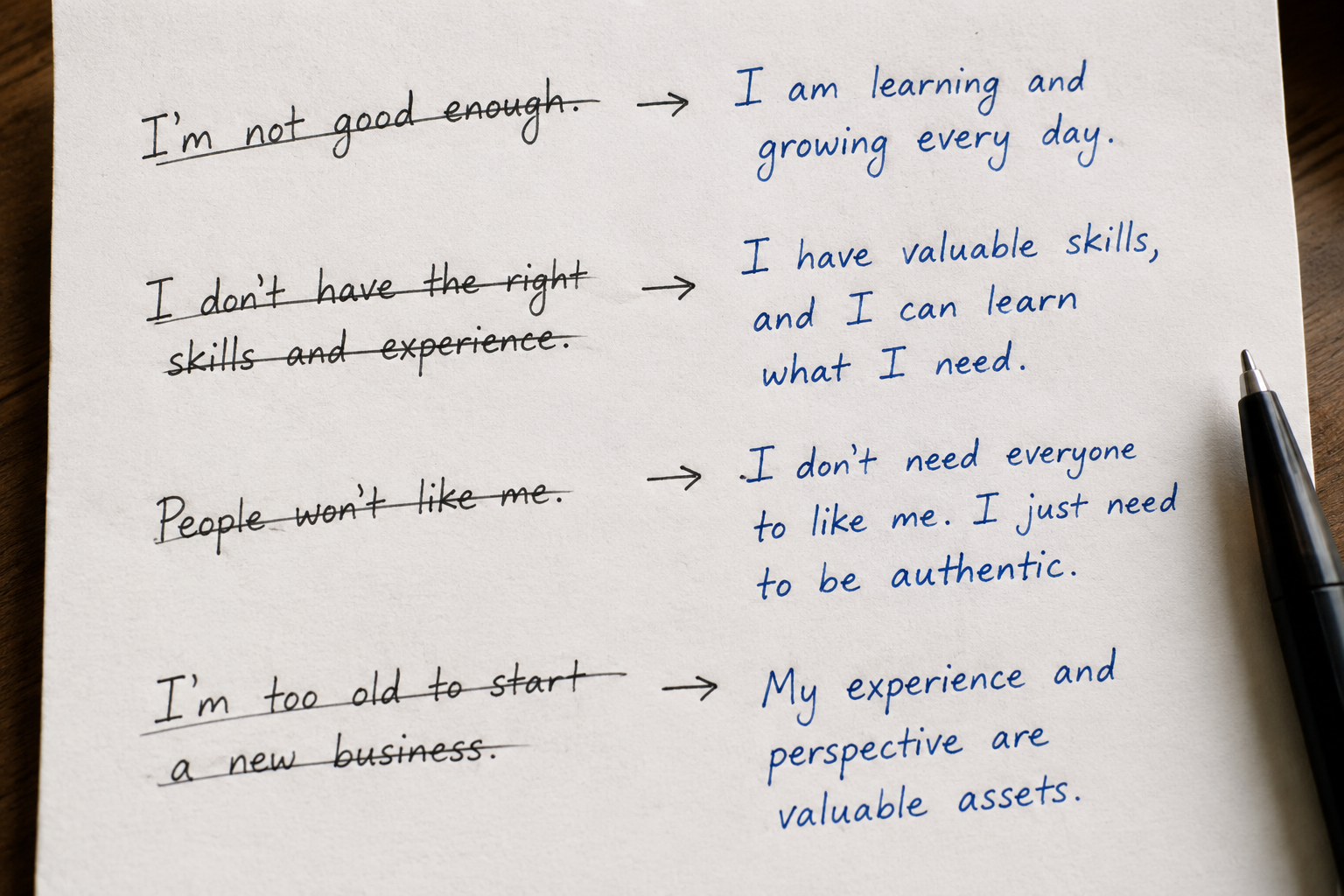
“I’m not good enough.”
“I don’t have the right skills or experience.”
“People won’t like me.”
“I’m too old to be starting over.”
These thoughts often appear so quickly and so automatically that we rarely stop to question them. Instead, we absorb them. We begin to treat them as truth. Over time, they stop sounding like thoughts and start sounding like identity.
This process happens to all of us in different ways. We inherit stories from family systems, culture, institutions, relationships, trauma, rejection, and past experiences. Some stories were spoken directly to us. Others were implied through silence, exclusion, criticism, or comparison. Eventually, those narratives become internalized and begin shaping how we see ourselves and what we believe we are capable of becoming.
One of the core ideas behind narrative reframing and exploration is this: we are not the stories we tell ourselves. That does not mean those stories are meaningless. It does not mean they came from nowhere. Many of them were developed as forms of protection. They helped us survive difficult environments, avoid rejection, minimize risk, or make sense of painful experiences. The problem begins when those narratives continue operating long after the original context has changed.
A person who was constantly criticized may develop a narrative that says, “Nothing I do will ever be enough.” Someone who experienced exclusion may carry the belief that they are fundamentally unlikable. A person navigating transition or reinvention later in life may begin telling themselves they have “missed their chance.”
These narratives often feel permanent because they have been rehearsed internally for years. They shape behavior in subtle ways. They influence confidence, relationships, creativity, vulnerability, and decision-making. They can stop someone from applying for a job, launching a business, writing a book, speaking up, setting boundaries, or pursuing a meaningful life transition. There is hope however – narrative reframing.
Narrative Reframing in 3 Easy Steps
The challenge is that most people do not recognize these narratives as stories. They experience them as facts. This is where the process of externalizing the narrative becomes important. Externalizing means separating yourself from the story rather than treating the story as your identity. Instead of saying, “I am a failure,” the narrative becomes, “I notice a story that tells me I will fail.” That may sound like a small shift in language, but psychologically and emotionally, it creates distance. It opens space for reflection instead of automatic belief.
Naming the narrative is often the next step. For example, someone might identify recurring internal messages as “the perfectionist,” “the critic,” “the protector,” or “the voice of rejection.” Naming the narrative allows a person to observe it more clearly. It becomes something they can examine rather than something that unconsciously controls them.
The third step is reframing the narrative. Reflective writing can be especially powerful during this process because it slows down internal dialogue and makes it visible. Thoughts that once felt overwhelming and abstract become concrete enough to explore. Patterns begin to emerge. People often discover that the same themes repeat themselves across relationships, work, creativity, and personal identity.
It Won’t Happen Overnight
This work is not easy. One of the biggest misconceptions about narrative reframing is that it is simply positive thinking. It is not about replacing difficult thoughts with forced optimism or pretending pain does not exist. In fact, reflective narrative work can initially feel uncomfortable because it requires honesty. It asks people to confront deeply rooted beliefs they may have carried for years or decades.
There is also grief involved sometimes. When individuals begin challenging old narratives, they often realize how much of their lives have been shaped by fear, shame, self-protection, or external expectations. That realization can be painful. There can also be resistance because old narratives, even harmful ones, are familiar. Letting go of them can feel destabilizing at first.
Narrative reframing does not happen overnight. It is usually a gradual process of recognizing old patterns, questioning inherited assumptions, and creating space for alternative interpretations of oneself.
For example, “I’m too old to start over” might eventually become, “I am bringing lived experience, resilience, and perspective into this new chapter.”
“I don’t have the right skills” might become, “I am still learning, and growth does not require perfection.”
“People won’t like me” might become, “Not everyone has to approve of me for my work and voice to matter.”
Narrative reframing is not about denial. It is about creating a more compassionate, grounded, and realistic relationship with oneself. The value of this process is profound because narratives influence identity, and identity influences behavior. When people begin separating themselves from limiting stories, they often discover possibilities that previously felt inaccessible. They become more willing to take risks, tolerate vulnerability, pursue meaningful goals, and engage more authentically with others.
This is especially important during periods of transition, reinvention, or healing. Starting a business, changing careers, writing publicly, ending relationships, coming out, processing trauma, or reclaiming identity all tend to activate internal narratives about worth, fear, and belonging. The goal is not to eliminate fear completely. The goal is to recognize that fear does not always tell the truth. This is how narrative reframing can benefit you right now.
We are shaped by stories, but we are not confined to them. Sometimes the most transformative moment is not when the narrative disappears, but when we learn to hear it without automatically surrendering to it.
If you’re ready to begin this journey with me, check out my book Odyssey of Heroes or sign up for one of my online courses. It all starts with you!