
Category: Identity

  • Stories We Build Around Friendships

    Stories We Build Around Friendships

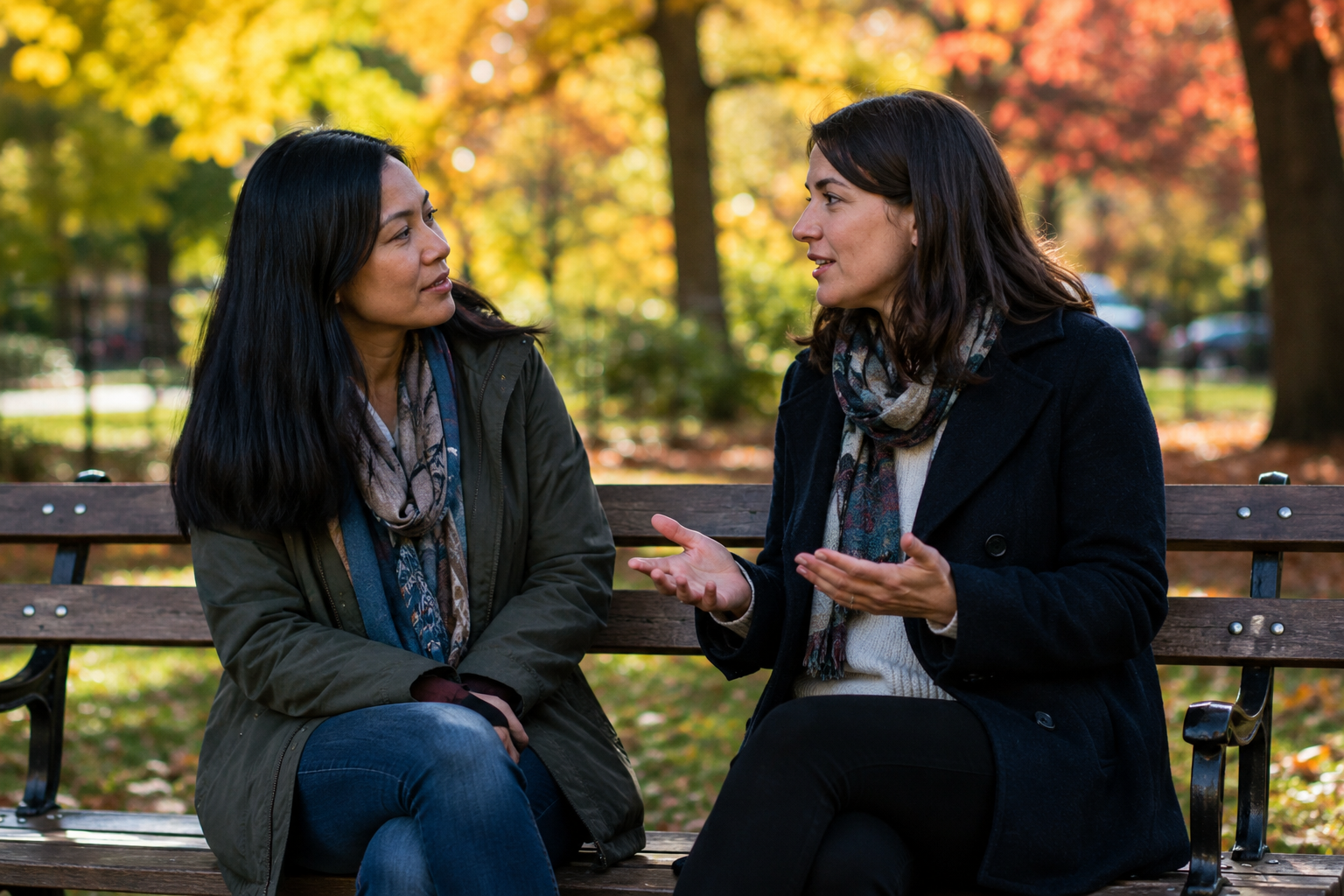
    Two people discussing their friendship on a bench

    When Friendships Change

    Recently, I found myself reflecting on a friendship that had existed for most of my adult life. It was the kind of friendship that becomes part of your personal history. When you know someone for decades, it is easy to assume that the relationship is a permanent fixture in your life. You begin to see it as part of who you are.

    As I thought about the possibility that this friendship might be coming to an end, I found myself asking a difficult question: What if the story I had been telling myself for years was no longer true?

    At first, that idea felt unsettling. I was not questioning whether the friendship had been real or meaningful. It was both of those things. What I began questioning was the narrative I had built around it.

    Many of us create stories that help us make sense of our lives. We tell ourselves things like, “This person will always be my friend,” or “We understand each other better than anyone else.” These stories are not necessarily wrong. In many cases, they are based on years of shared experiences and genuine connection.

    The problem is that people change.

    We change our interests, values, priorities, beliefs, and goals. Sometimes those changes happen gradually. They are so subtle that we do not notice them while they are occurring. Then one day we find ourselves looking across the table at someone we have known for years and realizing that both of us have become different people.

    The friendship may still exist, but the assumptions that once supported it no longer fit reality.

    What struck me most was the realization that I had expected the relationship to remain stable while both people within it continued to evolve. In hindsight, that expectation seems unrealistic. Change is one of the few guarantees in life. Yet many of us build our identities around the idea that certain relationships will remain largely unchanged.

    When reality moves in one direction and our personal narrative stays frozen in place, tension begins to develop.

    This is not limited to friendships. It can happen in marriages, family relationships, careers, and even our relationship with ourselves. We continue operating from an old story while life quietly writes a new one.

    The result is often confusion, disappointment, conflict, or grief.

    The more I reflected on this, the more I realized that suffering may not come solely from change itself. It may come from our resistance to updating the stories we tell about our lives. We cling to an outdated version of reality because it feels familiar and comfortable. Meanwhile, reality continues to move forward without asking for our permission.

    That does not mean relationships are not worth investing in. It does not mean every friendship is temporary or destined to fail. It simply means that relationships are living things. They require adaptation because the people within them are constantly evolving.

    Don’t Assume Friendships Last Forever

    Perhaps the healthiest approach is not to assume that a relationship will remain the same forever. Instead, we can recognize that change is inevitable and remain open to renegotiating what the relationship looks like over time.

    Some relationships will grow stronger through that process. Others may naturally come to an end. Neither outcome erases the value of what existed before.

    The lesson I am taking from this experience is not that relationships are fragile. It is that stories need revision.

    The narratives that help us make sense of one season of life may not be sufficient for the next. If we are unwilling to update them, we may find ourselves arguing with reality instead of learning from it.

    Growth requires more than changing our circumstances. It requires changing the stories we tell ourselves about who we are, who others are, and how we fit together.

    Sometimes the most difficult part of growth is not letting go of a person. Sometimes it is letting go of an old story.

    If you find yourself in a similar situation, check out my free eBook 4 Easy Steps to Transform Your Life Through Disruption.

  • Moving Beyond The Hero’s Journey

    Moving Beyond The Hero’s Journey

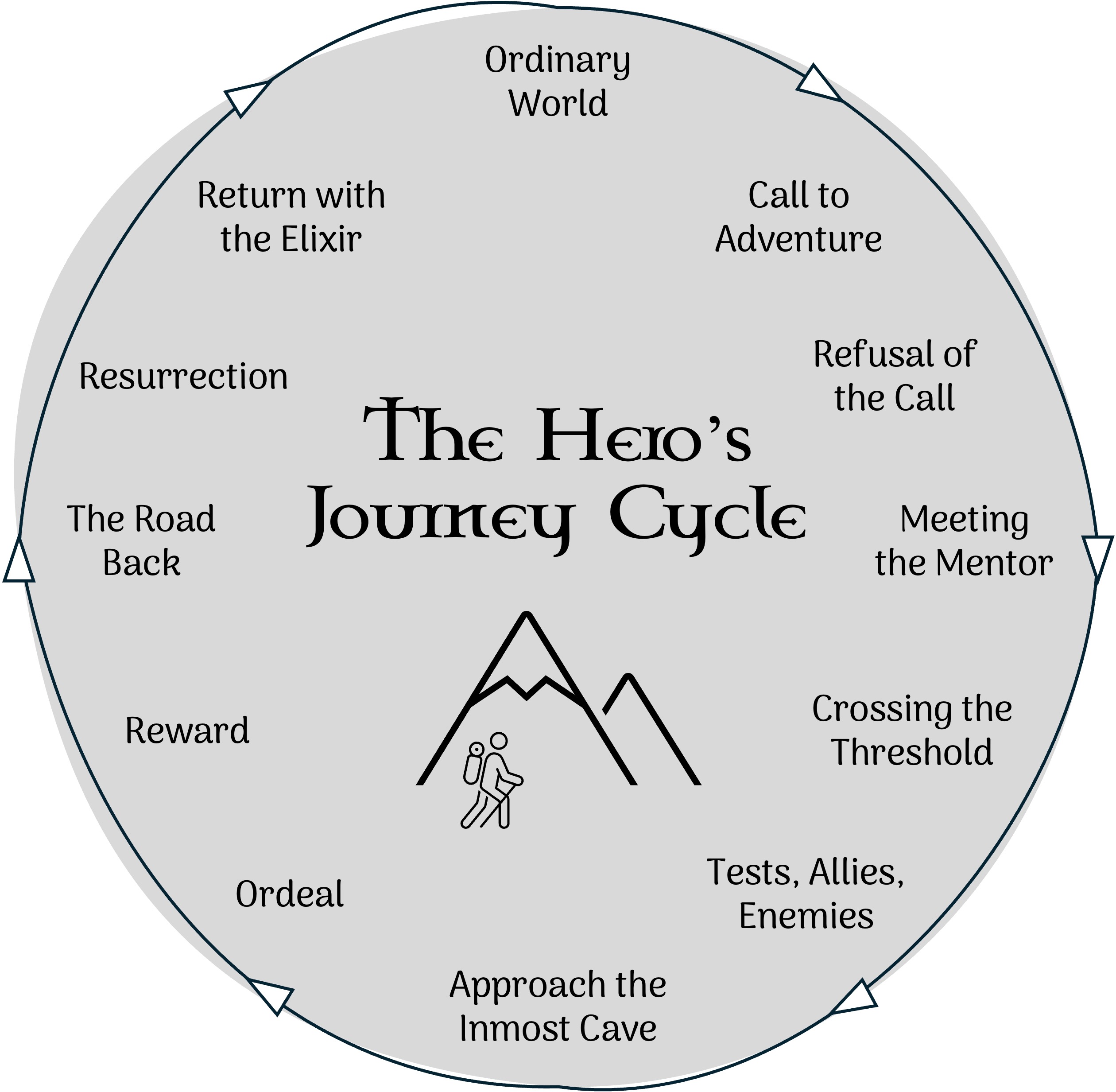
    The Hero's Journey cycle

    The Hero’s Journey: A Foundation for Personal Narrative Transformation

    The Hero’s Journey has become one of the most recognizable frameworks for understanding human transformation. From mythology and literature to film and popular culture, the structure appears everywhere. A person begins in an ordinary world, faces challenges and uncertainty, encounters obstacles, experiences transformation, and eventually returns changed in some meaningful way.

    For many people, this framework resonates deeply because it mirrors the emotional experience of struggle, growth, and self-discovery. It offers a way to make sense of pain, transition, and reinvention. It reminds us that difficult seasons are often part of a larger developmental process rather than evidence of personal failure.

    At its best, the Hero’s Journey helps people recognize that their lives contain movement, tension, meaning, and possibility. But there is also a limitation to viewing personal identity entirely through the lens of becoming a hero.

    Not everyone experiences life as a dramatic quest. Not every transformation arrives through triumph, certainty, or victory. Many people are simply trying to survive grief, rebuild identity after trauma, navigate transition, recover from rejection, or learn how to exist more authentically in a world that has often demanded performance over honesty.

    For some individuals, the pressure to become “the hero of your story” can actually feel exhausting.

    • What happens when someone does not feel heroic?
    • What happens when growth is slow, nonlinear, quiet, or invisible to others?
    • What happens when survival itself is the accomplishment?

    These questions invite us into a broader and more accessible understanding of personal narrative.

    Evolving Beyond the Foundation

    The stories we tell ourselves about who we are do not always unfold in clean narrative arcs. Real life is rarely structured like a movie script. Human identity is shaped through repetition, relationships, memory, emotion, culture, loss, adaptation, and meaning-making over time. We are constantly interpreting our experiences and organizing them into narratives that help explain ourselves to ourselves. Some of these narratives are empowering. Others become restrictive.

    A person who repeatedly experiences rejection may develop a story that says, “I do not belong.” Someone who grows up in highly critical environments may internalize the belief that they must constantly achieve in order to deserve worth or acceptance. A person navigating trauma may begin seeing themselves primarily through the lens of what happened to them rather than who they are becoming beyond it. Over time, these narratives shape identity in profound ways.

    This is why narrative exploration matters so deeply. The goal is not necessarily to turn ourselves into heroes. The goal is to become more aware of the stories operating underneath our choices, fears, relationships, and sense of self.

    Narrative awareness allows us to ask important questions:

    • Where did this story come from?
    • Who taught me to see myself this way?
    • What experiences reinforced this belief?
    • Does this narrative still serve me?
    • Is there another way to understand my life and identity?

    These questions create space for reflection rather than automatic self-judgment. They invite curiosity instead of shame.

    In many ways, identity is less about discovering one fixed “true self” and more about understanding the evolving stories we participate in throughout our lives. Human beings are constantly changing. We adapt to environments, relationships, opportunities, trauma, aging, success, loss, and transition. The narratives that once protected us may later begin limiting us.

    • A story that once said, “Stay quiet so you do not get hurt,” may eventually prevent someone from speaking authentically.
    • A story that says, “You must always be productive to have value,” may slowly disconnect a person from rest, joy, and emotional well-being.
    • A story that says, “You are too old to begin again,” may prevent someone from pursuing meaningful work, creativity, or connection later in life.

    The important thing is not whether these stories exist. Everyone has them. The important thing is whether we recognize them as narratives rather than unquestionable truth.

    This is where reflective writing and personal narrative work can become transformative. Writing slows down thought. It allows individuals to externalize internal dialogue and observe patterns that may otherwise remain invisible. Experiences that once felt chaotic or overwhelming can begin to take shape through language and reflection.

    Often, people discover that they are carrying identities they never consciously chose. They may realize they have spent years trying to be “the responsible one,” “the successful one,” “the invisible one,” “the caretaker,” “the disappointment,” or “the outsider.” These identities are rarely random. They are usually connected to adaptation, survival, belonging, or emotional protection.

    Recognizing these patterns is not about blaming ourselves or rewriting our lives into unrealistic positivity. It is about creating enough distance to ask whether old narratives still deserve authority over our present identity. Sometimes the most meaningful transformation is not becoming the hero. Sometimes it is becoming honest. Sometimes it is learning to see ourselves with greater compassion. Sometimes it is understanding that our worth was never dependent on perfection, productivity, achievement, or external validation in the first place.

    The Hero’s Journey remains valuable because it reminds us that transformation is possible. But perhaps the deeper invitation is not to become heroic. Perhaps it is to become more conscious of the stories shaping our lives and more intentional about the narratives we continue carrying forward.

    We may not always control what happened to us. We may not control every chapter of our lives. But we can begin examining the meaning we attach to those experiences and the identities we build around them. And sometimes, that process alone can change everything.

    Learn more about how you can transform your personal narrative and identity by checking out our services.

  • How Personal Narrative Shapes Identity

    How Personal Narrative Shapes Identity

    Identity is shaped by stories

    How We Construct Our Identity

    Whether we realize it or not, our identity is deeply connected to the stories we tell ourselves.

    Some parts of those stories are shaped by joy, connection, and belonging. Other parts are shaped by pain, rejection, trauma, loss, or the expectations placed upon us by family, culture, religion, and society. Over time, these experiences become more than memories. They become narratives—internal stories that influence how we see ourselves and how we move through the world.

    Personal narrative is not simply the story of what happened to us. It is the meaning we attach to those experiences. It is the lens through which we interpret our past, understand our present, and imagine our future.

    From childhood, many of us begin absorbing messages about who we are supposed to be. Some of these messages are direct. Others are subtle and unspoken. We may learn that being emotional is weakness, that love must be earned, that success determines worth, or that certain parts of ourselves should remain hidden in order to be accepted.

    For LGBTQ+ individuals especially, these narratives can become deeply painful. Many grow up hearing that their identity is “wrong,” dangerous, shameful, or incompatible with love, spirituality, or belonging. Even when those messages are never spoken directly, they can still be communicated through silence, avoidance, exclusion, or conditional acceptance.

    Over time, these experiences can shape a person’s internal narrative in profound ways. Someone who experiences rejection may begin to believe they are unlovable. Someone who is repeatedly silenced may begin to believe their voice does not matter. Someone who is taught to hide their authentic self may begin living according to survival rather than truth.

    As I wrote in Odyssey of Heroes, “Before we learn to write, we learn to listen.” The stories we absorb early in life often become the foundation of our identity long before we consciously question them.

    The challenge is that many inherited narratives are incomplete, distorted, or rooted in fear rather than truth. Trauma, shame, discrimination, and emotional wounds can convince people that they are broken, powerless, or undeserving of love and connection. These narratives often operate quietly beneath the surface, shaping relationships, choices, emotional reactions, and self-worth.

    Identity Is Not Fixed

    One of the most powerful aspects of personal narrative is that it can evolve. Human beings are not static characters trapped inside a single version of themselves. We are constantly interpreting, revising, and reconstructing the meaning of our experiences. Through reflection, awareness, and storytelling, people can begin to separate themselves from the harmful narratives they inherited or internalized.

    This is where reflective writing becomes transformative.

    Writing allows us to observe our experiences rather than remain consumed by them. It creates distance between who we are and what happened to us. Instead of unconsciously repeating painful stories, we begin examining them with curiosity and compassion.

    Reflective writing can help people identify patterns that have shaped their identity for years. It encourages questions such as:

    • Where did this belief about myself come from?
    • Is this narrative actually true?
    • Who would I be without this shame or fear?
    • What story do I want to live moving forward?

    In many ways, healing begins the moment we recognize that our current identity may have been shaped by narratives that no longer serve us.

    As I explored in Odyssey of Heroes, many of us spend years living according to inherited scripts created by family systems, religious environments, cultural expectations, or traumatic experiences. But eventually, awareness opens the possibility for change. “The story you inherited is not the one you have to accept or live.” 

    This does not mean ignoring the past or pretending painful experiences never happened. Personal growth is not about erasing trauma. It is about changing our relationship to it. The experiences that once created shame can eventually become sources of resilience, empathy, wisdom, and self-understanding.

    For many people, especially those who have experienced marginalization or trauma, reclaiming personal narrative becomes an act of liberation. It allows individuals to move from silence to self-expression, from survival to authenticity, and from self-rejection to self-compassion.

    Narrative transformation does not happen overnight. It is an ongoing process of reflection, honesty, grief, and growth. Some stories take years to fully understand. Others continue evolving throughout our lives. But each time we reflect on our experiences with greater awareness, we create the possibility for healing and transformation.

    You do not have to remain trapped inside a story written by fear, shame, trauma, or the expectations of others. Identity is not only shaped by what happened to you. It is also shaped by the meaning you choose to create from those experiences.

    Your story is still being written. And you have more power over the next chapter than you may realize.

    Learn more about the coaching and consulting services Dr. Dwayne Custer offers today!